
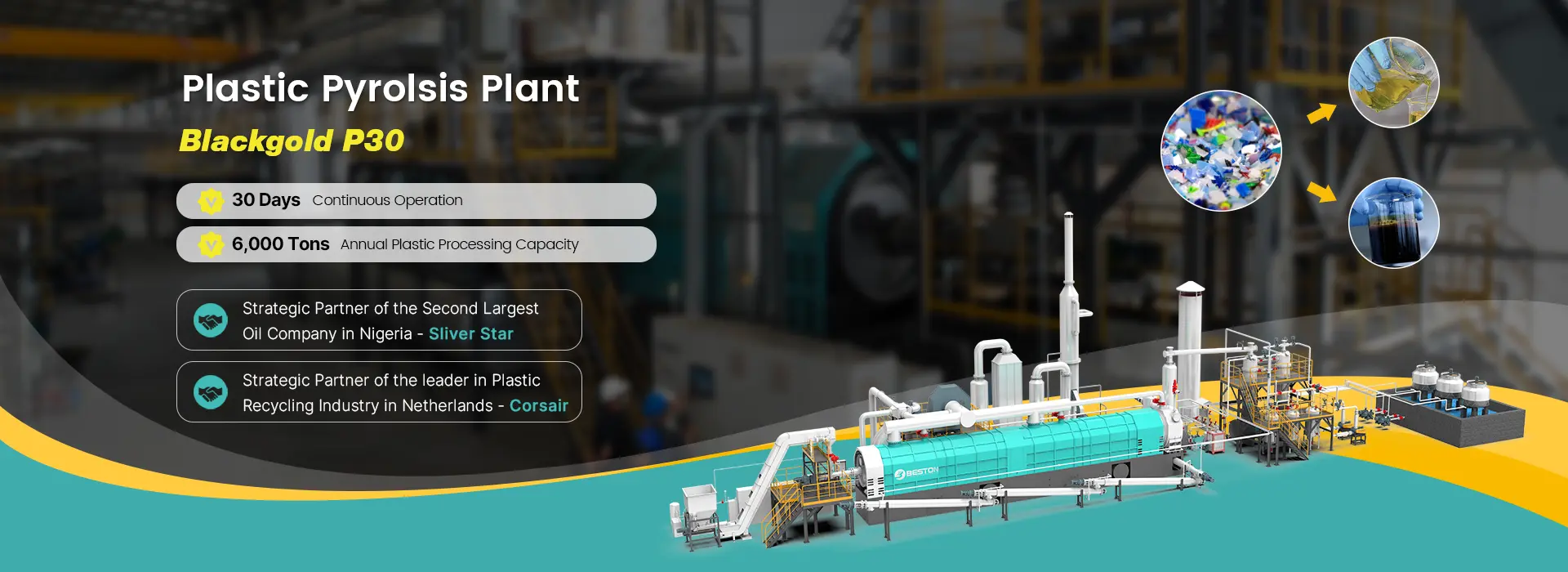
Plastic pyrolysis plant is emerging as a transformative solution in addressing the global plastic waste crisis. This advanced technology enables the conversion of waste plastics into valuable fuel oil through advanced catalytic pyrolysis process. As the world seeks sustainable methods to combat plastic pollution, plastic pyrolysis machine stands out as a promising solution. It creates alternative energy options and mitigates environmental impact. Read on, you will learn the technological advancements of this modern equipment in plastic recycling field.
Successful Case in Finland: ISCC-Certified Oil Production
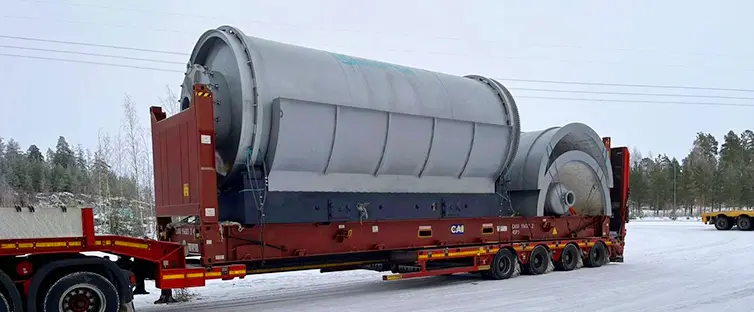
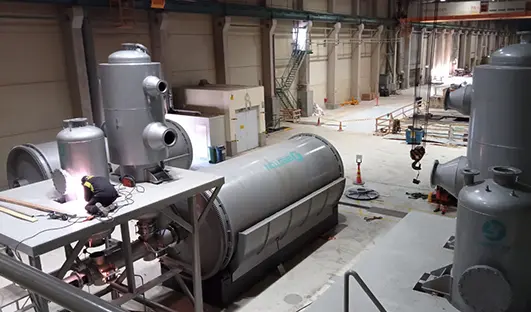
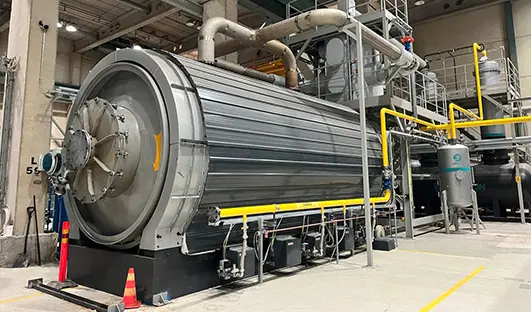
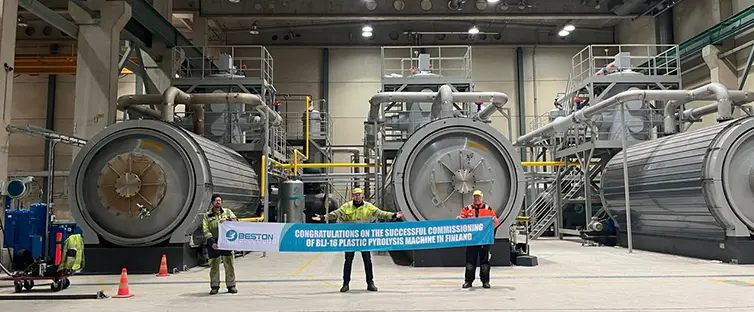
Corsair Group is at the forefront of plastic waste chemical recycling. With operations across Europe and Asia, the company focuses on scalable solutions to address plastic waste and advance circular plastics. By deploying plastic pyrolysis equipment supplied by Beston Group, Corsair produces pyrolysis oil that is fully certified under ISCC PLUS. The project establishes a certified circular feedstock pathway and sets a benchmark for plastic pyrolysis recycling projects in Europe.
Project Information
- Location: Jämsä, Finland
- Acceptance Date: October 2025
- Configuration: 3 sets of BLJ-16 plastic to fuel machines with catalytic system
- Oil Application: Sold to oil refineries. After further processing, used as raw material for recycled plastics production.
Project Status
- Equipment Phase: Installation, debugging, and trial operation have been completed.
- Plastic Processing Capacity: 24-30 tons per day, annual processing capacity reaches 12,000 tons.
- Future Plan: Add multiple sets of equipment to expand the production scale of the Phase II project.
- Strengthening Cooperation: Beston Group will co-host the Pyrolysis Recycling Conference in Europe with Corsair Group.
3 Models of Plastic Pyrolysis Plant for Sale
The plastic pyrolysis machine converts waste plastics into pyrolysis oil, syngas, and solid residue. It integrates feeding, reaction, condensation, discharge, and gas treatment systems, and is available in continuous and batch types. See the parameters and component diagram below for details.
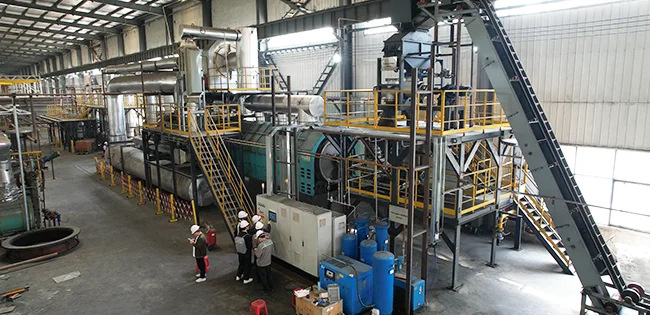
Continuous Type: Blackgold P30
- Annual Plastic Processing Capacity: 6,000 tons
- Cycle Duration: 30 days/cycle, 300 operating days per year
- Oil Output: Light Oil & Non-standard Diesel
- Key Features:
– Smart wax oil collection, no clogging
– Automatic temperature control with ±10℃ accuracy
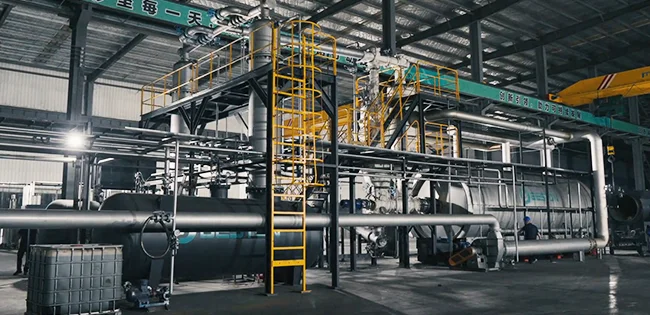
Batch Type: BLJ-20
- Annual Plastic Processing Capacity: 4,000 tons
- Batch Duration: 1 day
- Oil Output: Light Oil & Non-standard Diesel
- Key Features:
– Large-capacity main furnace size (ø2800*10000)
– No open flame, no oil/gas leakage
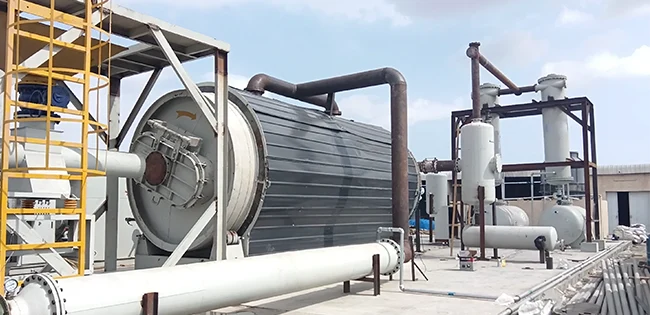
Batch Type: BLJ-16
- Annual Plastic Processing Capacity: 3,000 tons
- Batch Duration: 1 day
- Oil Output: Catalytic Pyrolysis Oil
- Key Features:
– 4 flexible configuration options
| Model | Blackgold P30 | BLJ-20 | BLJ-16 Standard | BLJ-16 WAX | BLJ-16 CAT | BLJ-16 ULTRA |
|---|---|---|---|---|---|---|
| Manufacturer | BESTON | BESTON | BESTON | BESTON | BESTON | BESTON |
| Time to Market | 2026 | 2025 | 2013 | 2022 | 2022 | 2022 |
| Motor Brand | Chinese brand | Chinese brand | Chinese brand | Chinese brand | Chinese brand | ABB Explosion-proof |
| Suitable Raw Materials | Waste plastics; Tires; Oil sludge | Waste plastics; Tires; Oil sludge | Whole tire<120cm; Tire blocks<15cm; Oil soil with liquid content<30% | Waste plastic bales (Max.0.9*0.9*1.6m) | Waste plastic bales (Max.0.9*0.9*1.6m) | Waste plastics; Tires; Oil sludge |
| Input Capacity (Max.) | Waste plastic pellets: 0.8-1.05t/h; Rubber powder: 1.25-1.5t/h; Oil sludge:1.8-2.3t/h | Waste plastic pellets: 12-13t/d; Tire: 18-20t/d; Oil sludge:20-25t/d | Whole tire <120cm or Tire blocks<15cm: 10-12t/batch; Sidewall removed tire: 15-16t/batch; Oil soil: 16-18t/batch | 8-10t/batch | 8-10t/batch | Waste plastic bales: 8-10t/batch; Whole tire <120cm or Tire blocks<15cm: 10-12t/batch; Sidewall removed tire: 15-16t/batch; Oil sludge: 16-18t/batch |
| Working Method | Fully Continuous | Batch | Batch | Batch | Batch | Batch |
| Final Oil Quality | Pyrolysis oil; Pyrolysis oil with wax or light oil; Gasoline blending components | Pyrolysis oil; Non-standard diesel and light oil | Pyrolysis oil | Pyrolysis oil with wax | Pyrolysis oil with light oil | Pyrolysis oil; Pyrolysis oil with wax or light oil |
| Reactor Material | 304/310S Stainless steel | Q345R Boiler steel and 304/316L/310S Stainless steel | Q345R Boiler steel | 304 Stainless steel | 304 Stainless steel | 304 Stainless steel |
| Reactor Life Span (Years) | 5-8 Years | Q345R Boiler steel 2-3 Years; 304/316L Stainless steel 5-8 Years; 310S Stainless steel 8-10 Years | 2-3 Years | 5-8 Years | 5-8 Years | 5-8 Years |
| Guarantee (Months) | 12 | 12 | 12 | 12 | 12 | 12 |
| Delivery Time (Calendar Days) | 60-90 | 60 | 45 | 60 | 60 | 90 |
| Land Space Required (L*W*H*m) | 50*20*10 | 40*13*8 | 33*13*8 | 33*13*8 | 33*13*8 | 33*26*8 |
| Packing | 20*6*3m in bulk+13*40HQ | 1*40FR+4*40HQ | 1*40FR+3*40HQ | 1*40FR+3*40HQ | 1*40FR+3*40HQ+1*20GP | 1*40FR+8*40HQ |
| Installation Period (Calendar Days) | 60-90 | 45 | 45 | 45 | 45 | 60 |
Technological Breakthrough in Beston Group’s Plastic Pyrolysis Plant
Blackgold P30: Industrial-grade Solution
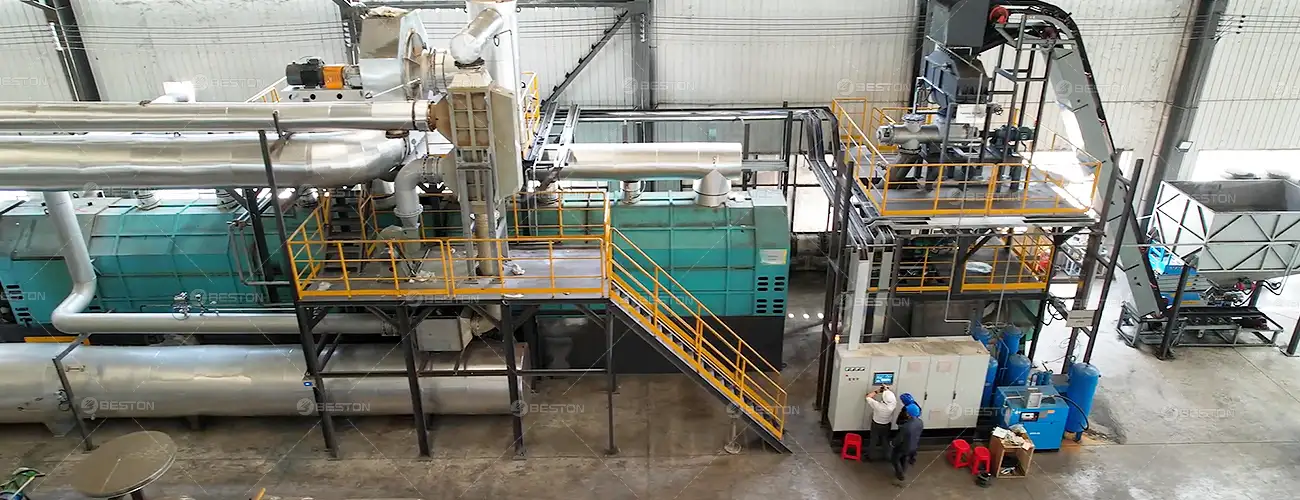
01 Mitigate Clogging & Coking: Continuous Operation
02 High Automation: Lower Cost, Higher Efficiency
03 Oil Fractionation: Increased Product Value
04 Self-Adjusting Sealing: Safety & Compliance
BLJ-20: Pyrolysis & Distillation Integration
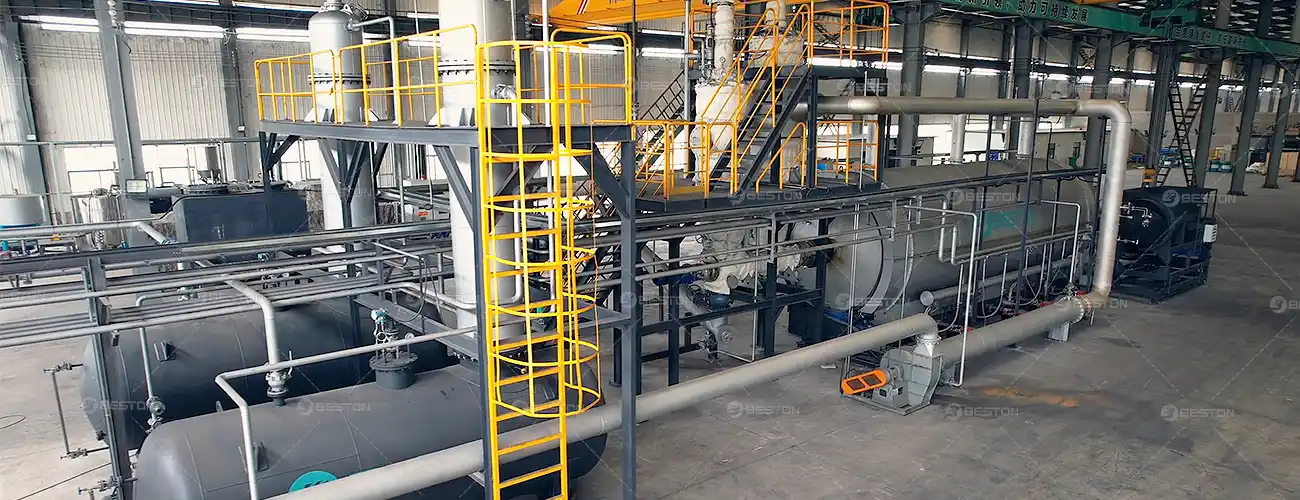
50% Higher Throughput
The ø2800×10000 reactor of BLJ-20 plastic pyrolysis plant increases daily processing capacity. The plastic processing capacity has been upgraded from 8 tons per day to 12 tons per day. Higher throughput improves productivity and makes waste conversion more efficient and reliable.
One-Step to Get Two Oil
Integrated fraction distillation separates naphtha (<200 °C) and non-standard diesel (>200 °C) in a single process. It improves oil quality, increases market value. Meanwhile, this design reduces operational costs by eliminating extra equipment and saving energy.
Maximum Safety & Comfort
Advanced sealing and high-temperature insulation prevent oil vapor leaks and eliminate open flames. Therefore, thermal hazards are minimized. This design ensures safe, stable, and comfortable operation, reducing risk and supporting continuous production.
How Does Catalytic Pyrolysis Prevent Wax Blockage in Plastic Pyrolysis Plants?
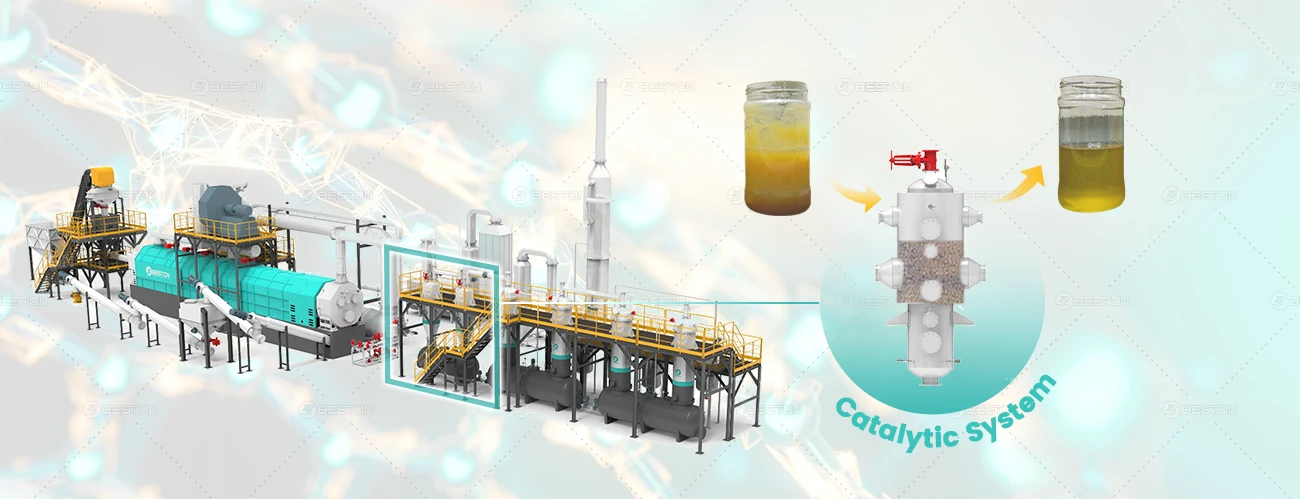
Plastic catalytic pyrolysis adds a catalytic tower at the manifold, between the pyrolysis reactor and the condenser. The tower is packed with molecular sieve catalyst and Pall rings. As oil vapor passes through, wax-forming long-chain hydrocarbons are cracked into lighter, lower-freezing-point components before they can condense and solidify in the pipeline. The catalytic action not only solves the wax clogging, but also increases the reaction efficiency 200%. This technology creates the following core values:
Optimize Project ROI
- Higher Oil Value: Wax oil solidifies easily and clogs pipelines. After catalytic conversion, it becomes a low-freezing-point light oil with higher calorific value and better market value.
- Lower Maintenance Cost: Less wax buildup means fewer cleaning stops, lower labor cost, and less production loss from downtime.
Improve Safety Performance
- Lower Overpressure Risk: With less wax deposition, system pressure stays more stable, reducing the risk of pressure spikes, pipe rupture, or leakage caused by blockage.
- Reduced Local Overheating: Less wax on pipe walls helps keep temperature distribution even, reducing thermal stress and fatigue on components.
Acceptable Plastic Types for Plastic Pyrolysis Plant
As a high molecular polymer, plastics come in many different types. Therefore, waste plastics are generated in various industries. However, not all plastics are suitable for waste plastic pyrolysis plant. The following is an analysis of common plastic types and their suitability for plastic to oil plant:

Note:
- Plastics containing halogen elements and oxygen elements are not recommended for pyrolysis treatment;
- We can assist in testing the plastics you have and determine the feasibility of the project;
- The simpler the type of plastic, the purer the plastic, the higher the pyrolysis oil yield.
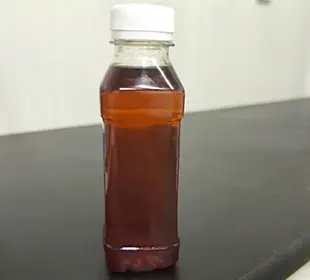
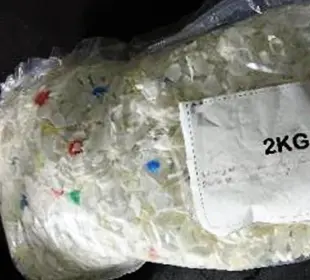
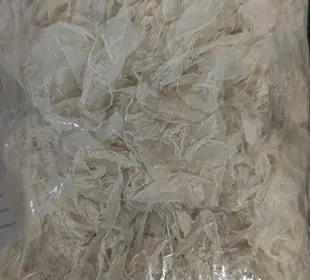
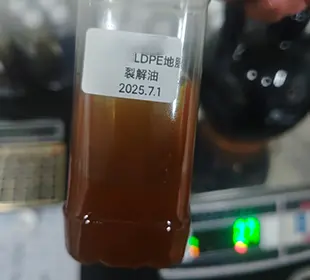
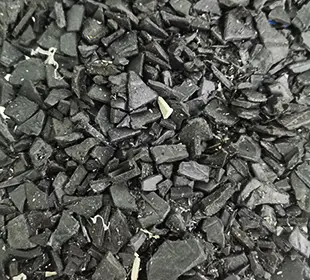
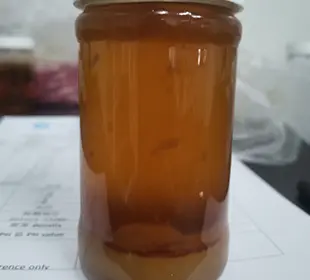
Pyrolysis Analysis Report of 4 Types of Plastic
Bottle Caps
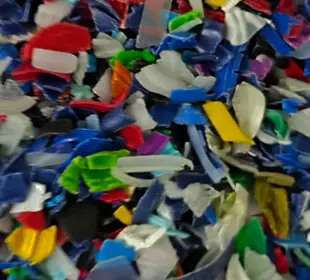
HDPE Granules
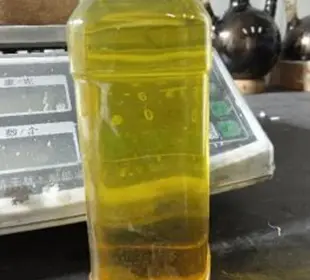
LDPE Mulch
PP Granules
How a Plastic Pyrolysis Machine Works?
The pyrolysis process encompasses five key stages: feeding, pyrolysis, oil collection, residue discharge, and gas treatment. While gas treatment remains similar across designs, continuous and batch systems operate quite differently in the first four stages:
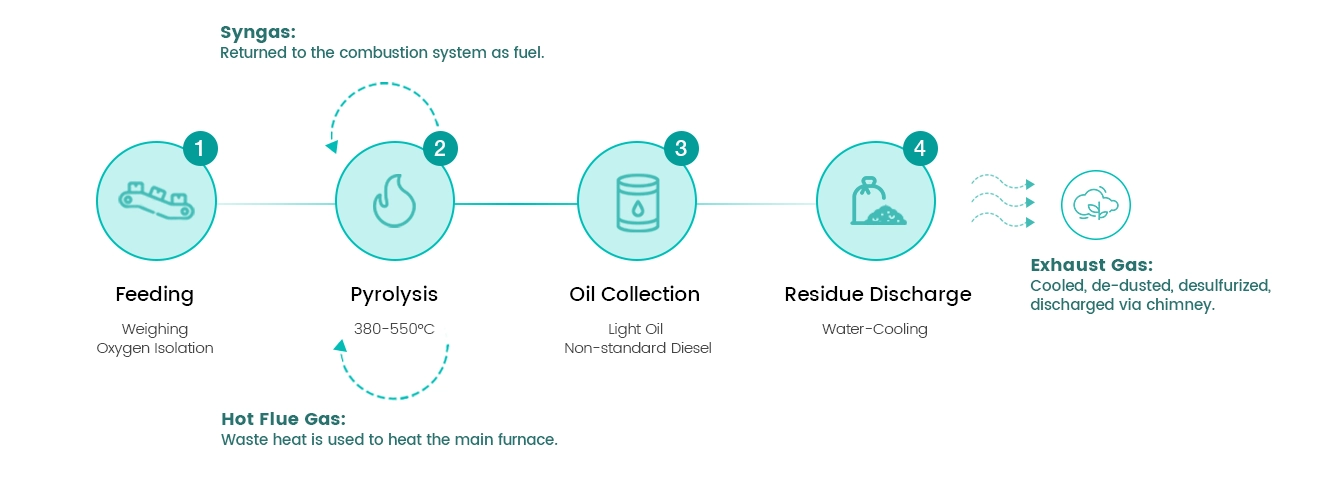
01 Feeding
- Continuous type: Feeds pre-weighed plastic (particle size below 2 cm) using a sealed screw feeder, while a nitrogen system isolates excess residual oxygen.
- Batch type: Accepts raw plastic directly with no strict size limits. Operators can open the furnace door for manual loading or use a hydraulic or screw feeder.
02 Pyrolysis
- Continuous type: Internal guide plates move the plastic toward the discharge outlet while long-chain polymers decompose into oil vapor(380-550°C), completing the reaction in a single pass.
- Batch type: The rotating main furnace heats the plastic continuously, breaking down long-chain polymers into oil vaporr(< 400°C) over approximately 10 hours per batch.
03 Oil Collection
- Continuous type: An oil-vapor spray system cuts the vapor directly into light and heavy fractions, yielding light oil and non-standard diesel in one step.
- Batch type: Oil vapor passes through the manifold and catalytic system to remove residue oil and wax oil, then condenses into pyrolysis oil.
04 Residue Discharge
- Continuous type: Solid residue discharges directly from the main furnace and cools step by step through a four-stage water-cooling system.
- Batch type: After pyrolysis, shutting off the burner lets the residue cool naturally inside the furnace (about 5 hours) before a screw conveyor discharges it.
Gas Treatment
- Non-condensable syngas: Purified by a water seal, then returned to the combustion system as fuel.
- Hot flue gas: In continuous plants, waste heat is used to heat the main furnace.
- Exhaust gas: Cooled, dedusted, and desulfurized before discharge through the chimney.
3D Demonstration: Blackgold P30 Continuous Plastic Plant Workflow
Plastic Pyrolysis Plant Creates Multiple Value: 3 Types Oil Collection
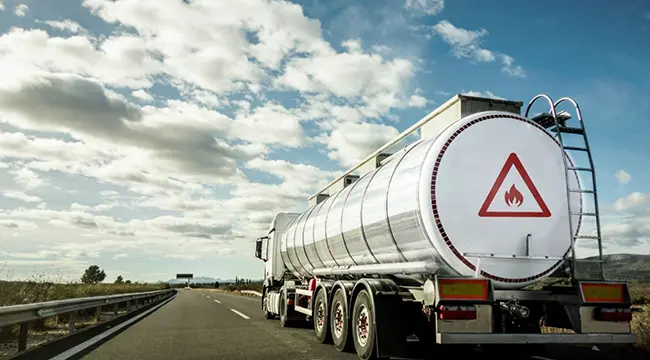
Plastic pyrolysis machine initially produces a broad-range hydrocarbon mixture, commonly referred to as catalytic pyrolysis oil. Through distillation, this oil can be separated into different fractions, including non-standard diesel and light oil, each with distinct properties and application pathways.
Catalytic pyrolysis oil:
a wide-boiling-range mixture with higher aromatic content, typically used directly as an industrial fuel after basic conditioning.
Non-standard diesel:
with diesel-range carbon distribution, suitable for energy applications but not compliant with on-road fuel standards.
Light oil:
a lighter, lower-boiling hydrocarbon fraction, suitable for further refining and blending applications after upgrading to naphtha.
For Energy Recovery
- Catalytic pyrolysis oil: used as an alternative fuel in industrial furnaces or boilers in cement plants, steel plants, and heavy industrial parks.
- Non-standard diesel: used as a substitute fuel for heavy-oil power generation units.
- Non-standard diesel: used as a driving fuel for heavy-duty machinery, including mining equipment, construction machinery, and port handling equipment.
For Further Processing
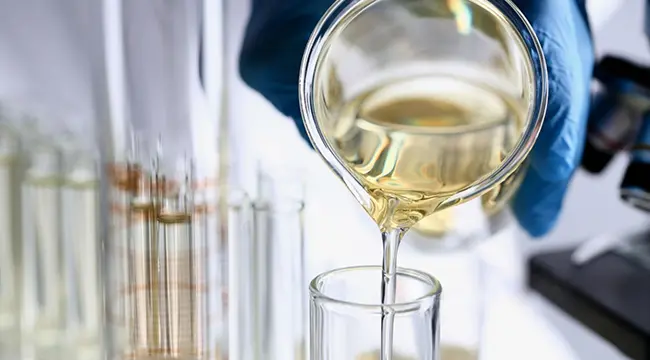
- Light oil: after refining and upgrading, can be used as a blending component in gasoline-range fuels.
- Light oil: after refining, can be used as a solvent or chemical raw material in applications such as coatings, inks, and industrial cleaning agents.
- Light oil: can be supplied to refineries or fuel blenders as a feedstock for further upgrading.
The Role of Pyrolysis in the Chemical Recycling Value Chain
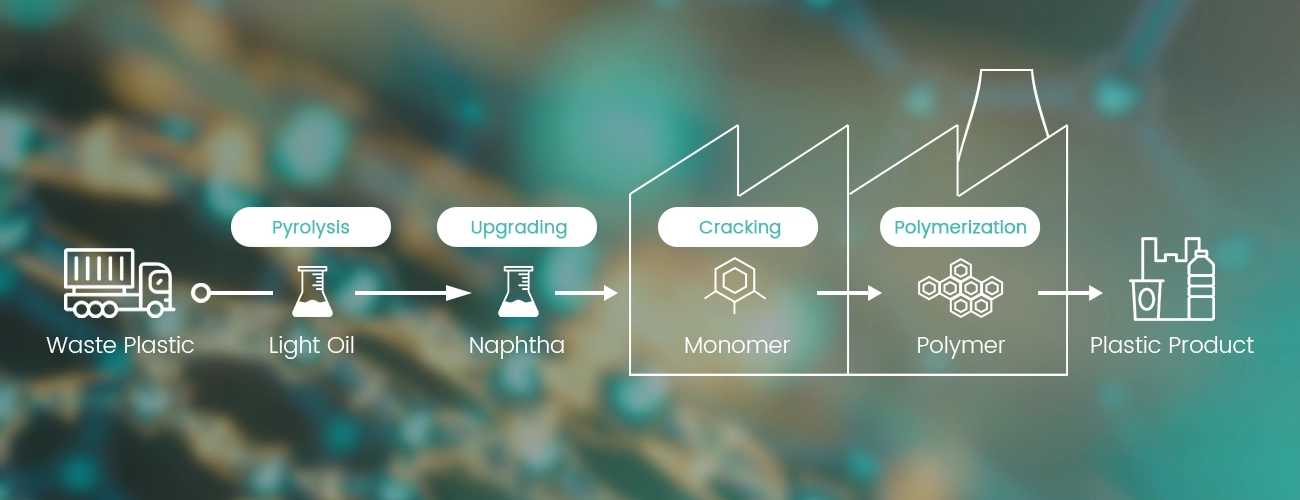
Plastic chemical recycling uses heat or catalysts to break waste plastic down into small-molecule feedstocks, which are then rebuilt into new plastic. It suits waste that mechanical recycling struggles to handle. A typical chain looks like this:
Waste Plastic → Pyrolysis (Light Oil) → Upgrading (Naphtha) → Cracking (Monomer) → Polymerization (Polymer) → Plastic Product
Plastic pyrolysis process is the starting point of this chain, and its value lies in three areas.
1. Wide Range of Recyclable Waste
Mixed plastics, multilayer films, and contaminated packaging are hard to recycle mechanically. Pyrolysis is more tolerant of such feedstock, greatly expanding the range of recyclable plastics.
2. Cost-Effective Process
The process is mature, with controllable investment and operating costs. Solid waste becomes a storable, transportable liquid, and the non-condensable gas can be reused as process heat.
3. High-Quality Precursor Oil
The light oil is the starting material for upgrading. Its impurity level and light fraction content directly affect upgrading difficulty and downstream acceptance.
Investment Opportunities in Plastic Pyrolysis Machine Across Industries

Plastic Products Processing
- Promote Circular Economy: Pyrolysis oil, as a clean energy, can be directly used as fuel in the processing of plastic products, replacing traditional energy sources. Thus, this reduces the energy cost and carbon footprint of enterprises. Waste plastics re-enter the production cycle through pyrolysis, promoting the circular economy of the plastic industry.
- Promote Industrial Linkage:Plastic pyrolysis plant can provide alternative raw materials for polymer production and re-enter the resource cycle. This “product” to “raw material” model promotes resource sharing in the upstream and downstream industries of plastics. Such a two-way cooperation helps promote the green transformation of the entire plastic industry chain.

Domestic Waste Disposal
- Reduce Land Occupation: The domestic waste treatment industry has traditionally relied on landfilling for the treatment of plastics. This method requires a lot of land resources. In contrast, plastic pyrolysis equipment can effectively convert waste plastics into smaller energy or chemicals. Therefore, this avoids occupying a large amount of land for stacking or disposal.
- Reduce Plastic Pollution: In the traditional landfill or incineration process, waste plastics often fail to be effectively utilized as resources, resulting in the long-term existence of pollution sources. Plastic pyrolysis technology avoids the risk of plastic pollution entering the natural environment. This promotes the waste treatment industry to develop in a greener direction.
Plastic Recycling Center
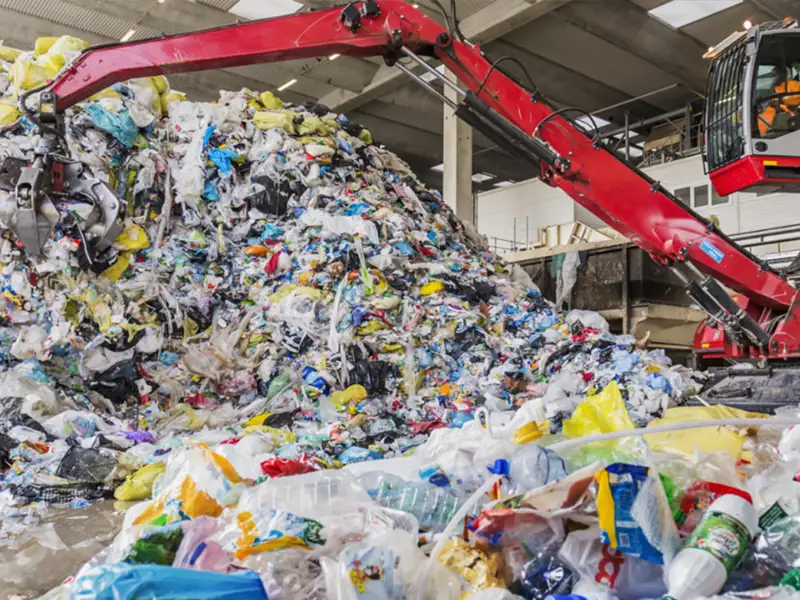
- Broaden Recycling System: The existing waste plastic recycling system has limited effect on some waste plastics that are difficult to recycle or have low value. After the introduction of waste plastic pyrolysis machine, these waste plastics can be converted into valuable pyrolysis products. Thus, this broadens the recycling channels and improves the overall recycling rate.
- Broaden Income Channels: The income of traditional recycling centers mainly depends on the recycled waste plastic raw materials. Under the effect of pyrolysis technology, the recycling center can turn the difficult-to-recycle waste plastics into valuable resources. This not only increases the source of income, but also further improves profitability by selling these by-products.
How Plastic Pyrolysis Plant Meets Policy Challenges
As global environmental policies continue to tighten, plastic pyrolysis process is becoming a key technology to cope with policy challenges and promote green transformation. The following are the specific advantages of plastic pyrolysis machine in the face of environmental regulations and policy challenges:

Accelerate Global Emission Reduction
Plastic pyrolysis meets the needs of more and more environmental regulations through the process of efficiently converting waste plastics into energy.
- The EU’s carbon emission trading system (EU ETS) encourages the use of low-carbon technologies, and pyrolysis technology has become an effective tool for enterprises to reduce emissions by reducing GHG emissions when incinerating plastic waste.
- Plastic pyrolysis equipment meets environmental protection standards by reducing greenhouse gas emissions. This can bring carbon offsets to enterprises. It earns revenue in the carbon trading market and helps enterprises reduce carbon tax costs.

Relieve Corporate Policy Pressure
Enterprises are facing increasingly severe environmental compliance pressure. Fortunately, plastic pyrolysis technology provides solutions that comply with environmental regulations.
- Pyrolysis converts waste plastics into renewable energy. This not only helps companies effectively reduce the impact of plastic waste on the environment. The technology can also reduce corporate processing costs and increase resource utilization efficiency.
- The government is paying more and more attention to plastic processing. If companies fail to handle waste plastics in accordance with regulations, they may face high fines and tax penalties. Pyrolysis technology effectively avoids these potential risks.

Promote Green Transformation
Plastic pyrolysis technology is highly consistent with the strategic direction of promoting green economy and low-carbon technology in countries around the world:
- Plastic pyrolysis technology can promote the use of clean energy, reduce dependence on traditional fossil energy, and provide new impetus for technological innovation in industries such as energy, environmental protection, and circular economy.
- Pyrolysis is also continuing to promote the development of a low-carbon economy, helping companies and countries cope with global climate change, and promoting the sustainable development of energy, environmental protection, and circular economy.
Positive Policy Signals on Plastic Pyrolysis
EU: The First Unified Legal Framework for Chemical Recycling Recycled Content
EU Rules for Calculating, Verifying and Reporting Recycled Plastic Content under the Single-Use Plastics Directive (SUPD) (Draft)
EU is developing Mass Balance–based rules for calculating and verifying recycled content from chemical recycling. This is the first time EU is establishing a unified and auditable regulatory framework for how chemically recycled materials may count as “recycled content.” The draft focuses on harmonized accounting methods, auditing procedures, and traceability requirements, laying the foundation for the formal integration of chemical recycling into EU’s regulatory system.
France: End-of-Waste Criteria for Plastic Pyrolysis Oil Officially Established
Order of 19 February 2024 Establishing End-of-Waste Criteria for Plastic Pyrolysis Oil Used as Feedstock in Steam Cracking Units
France issued a dedicated ministerial order establishing clear conditions under which plastic pyrolysis oil can attain End-of-Waste (EoW) status—meaning it is no longer classified as waste—once stringent quality and traceability requirements are met. This is one of the first comprehensive national regulatory frameworks in the EU governing pyrolysis oil EoW certification, representing a significant compliance advantage for chemical recycling operators.
UK: Chemical Recycling Included in Plastic Packaging Tax (PPT) Recycled Content Calculation
Plastic Packaging Tax — Mass Balance Accounting for Chemically Recycled Plastic (HMRC Policy Update)
The UK has confirmed that Mass Balance accounting will be permitted to calculate recycled content from chemical recycling within the Plastic Packaging Tax (PPT) framework, with implementation planned for 2027. This means chemically recycled feedstocks that meet traceability and verification requirements will carry direct fiscal value, incentivizing brands and packaging companies to procure compliant chemically recycled materials.
Why Choose Beston Group as Your Plastic Pyrolysis Plant Manufacturer?

Strong R&D Capabilities
- Experienced Team: Beston Group R&D team consists of over 50 skilled engineers. The majority have over 10 years of industry experience. Their expertise spans mechanical design, materials science, and automation control.
- Advanced Facilities: Our R&D center features modern laboratories and pilot plants. These facilities support both routine testing and the development of innovative technologies.
End-to-End Quality Control
- Premium Materials & Components: We use high-quality steel materials meets international standards. All components are from top-tier brands, ensuring durability of plastic pyrolysis plant.
- Comprehensive Inspections: Multiple quality checks are performed throughout the production process. These include airtightness tests, reactor assessments, and ultrasonic testing to ensure the safety and functionality of the equipment.
Integrated Service Support
- Pre-sales Assistance: We provide tailored product configurations. Customers are welcome to visit our production site.
- In-sales Updates: We keep customers informed about progress. We also assist with preparation for civil engineering work.
- After-sales Care: Our engineers guide installation and commissioning. We also offer professional training support.
Contact Beston to Get Plastic Pyrolysis Solution and Machine!
Plastic pyrolysis plant offers a direct response to the growing plastic waste crisis. Landfills are overwhelmed. Mechanical recycling handles only a fraction of the problem. Chemical recycling , converting waste plastic into pyrolysis oil, is emerging as the scalable solution. Beston Group develops advanced pyrolysis technology built for industrial deployment, helping clients turn plastic waste into fuel revenue while contributing to a circular economy. Follow us on LinkedIn for more projects update.
