
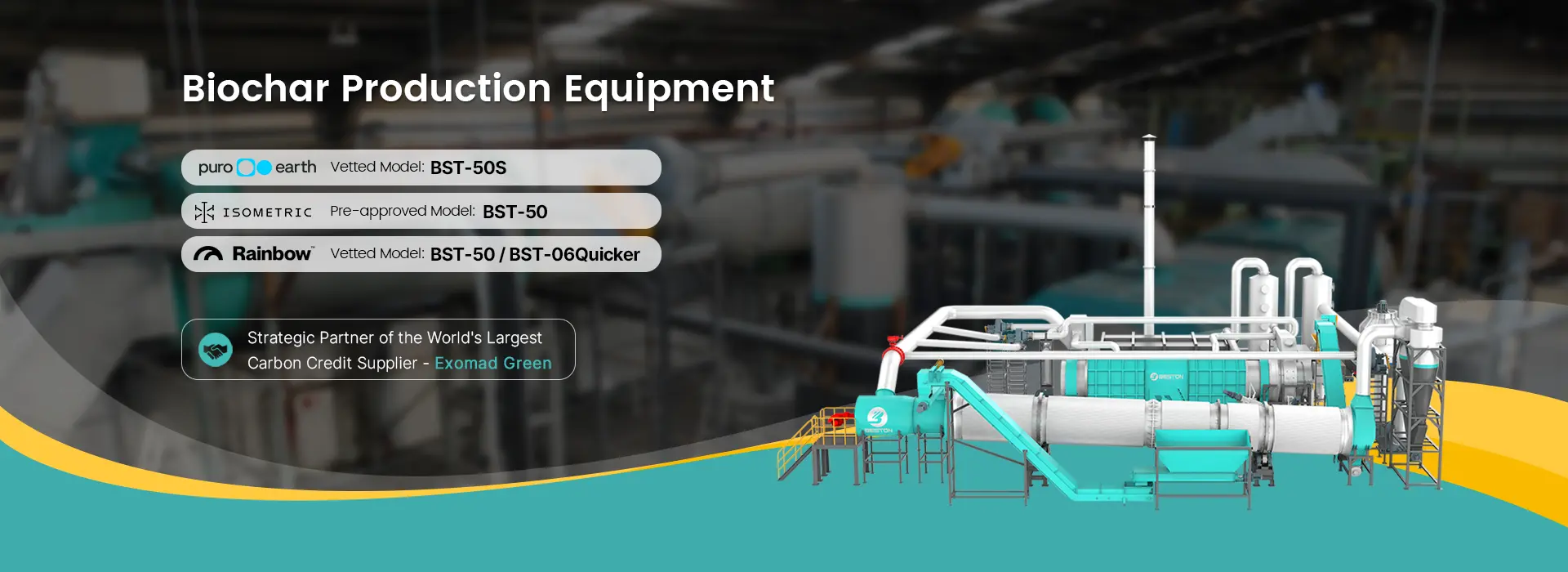
Biochar production equipment converts various biomass into biochar through pyrolysis technology. It is used across carbon removal projects, industrial decarbonization, and municipal sewage sludge treatment. The equipment integrates advanced combustion design, exhaust gas purification technology, and a dMRV system, ensuring continuous, clean, and data-traceable operational performance. Biochar machine spans from pilot-scale validation to industrial-scale production, supporting projects at every stage from full commercial deployment to feasibility testing.
2 Solutions Brought by Biochar Production Equipment
Selecting the right biochar machine depends on your project scale. Beston Group offers 2 solutions built for different stages of biochar production, from large-scale output to rapid pilot validation:
| Solution | Large-Scale Production Line | Pilot-Scale Production Line |
|---|---|---|
| Product Showcase | 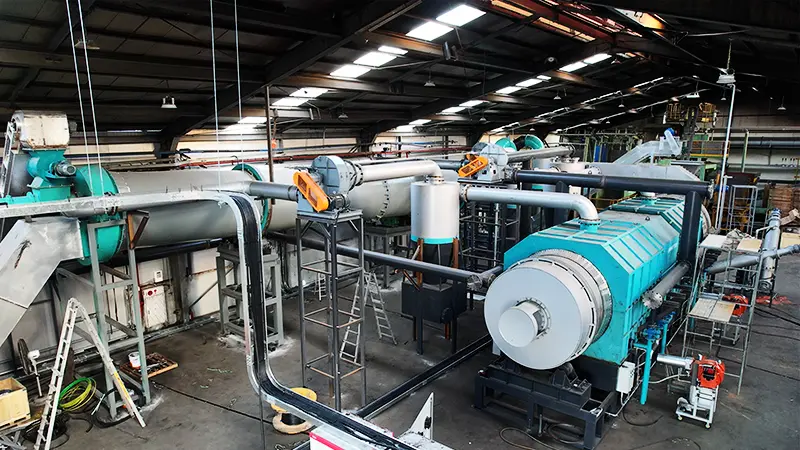 |
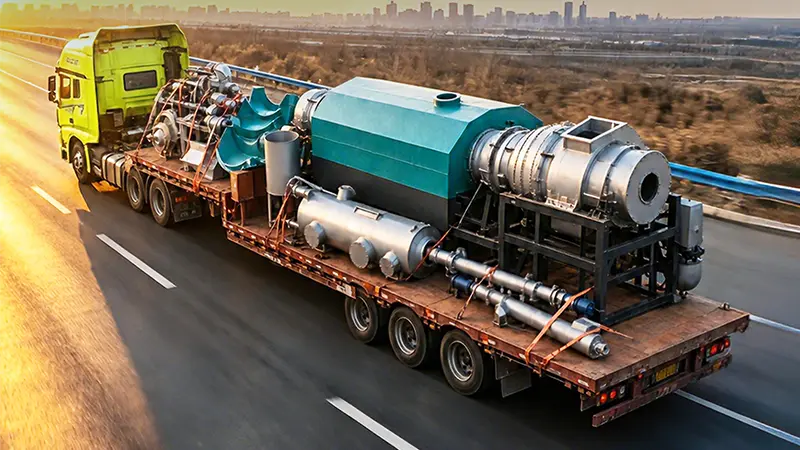 |
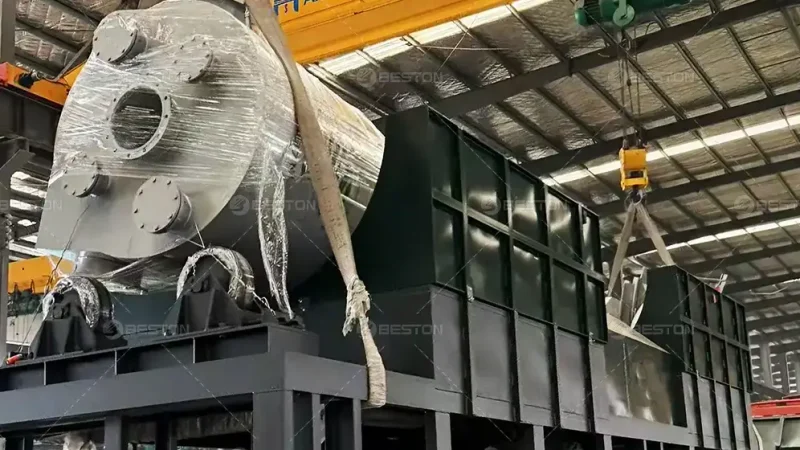
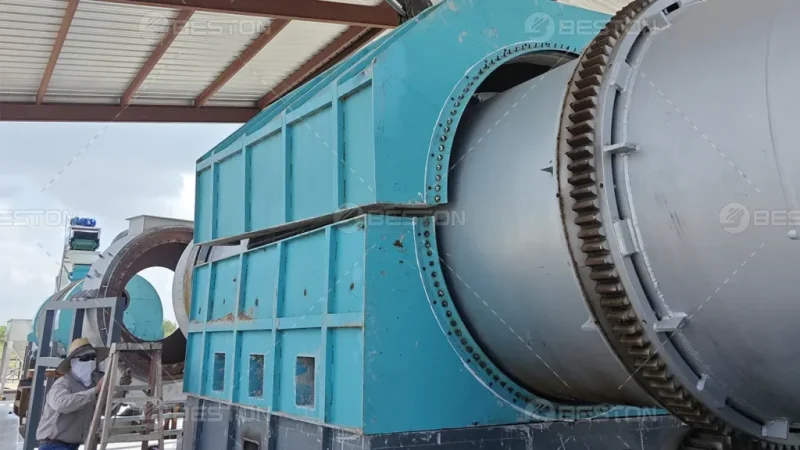
| Equipment Model | BST-50 / BST-50S | BST-06Quicker |
| Key Advantages | High Processing Capacity 20,000+ tons of biomass processed/year 6,000+ tons of biochar produced/year |
Rapid Deployment 8-hour movable on-site installation 90-day CDR project validation |
| Application Scenarios | Carbon removal project development, metallurgical carbon production, municipal sewage sludge treatment | CDR project validation, multi-site distributed feedstock processing, small-scale agricultural/forestry waste processing |
NOTE:
- Actual processing capacity and biochar yield vary depending on feedstock type; figures shown are for reference only.
- Project certification and validation timelines are estimated under ideal conditions and subject to actual project circumstances.
- Pyrolysis equipment specifications and configurations may be customized based on client requirements and site conditions.
Global Biochar Production Project Deliveries by Beston Group
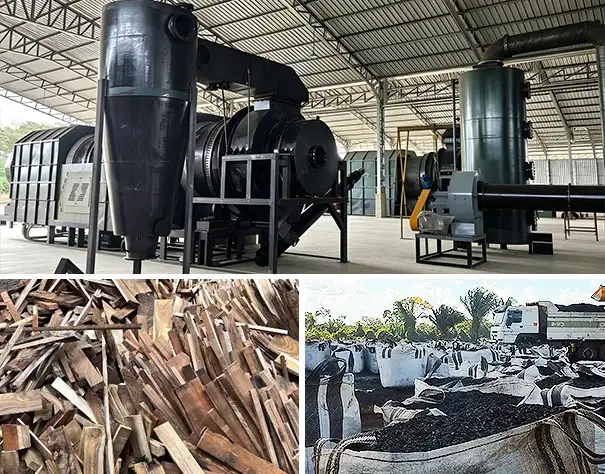
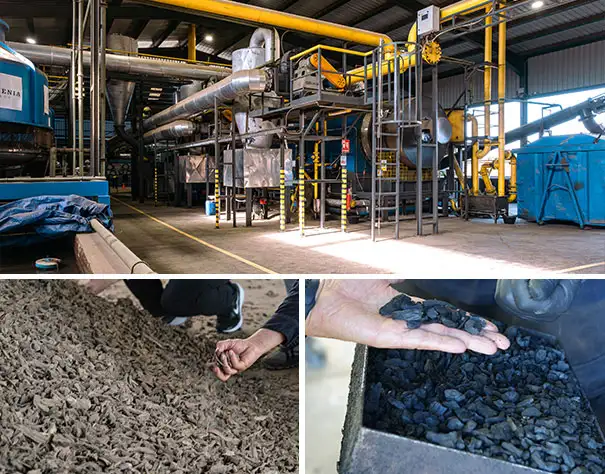
CDR Project: Timber Waste to Biochar
Exomad Green Concepción Facility · Bolivia
Benchmark of industrial-scale biochar CDR project worldwide
Project Information
| Operating since December 2025 |
Raw material Timber processing waste |
| Carbon Credits Sold 2,000,000+ CORCs |
Biochar use Farmland soil improvoment |
Equipment Configuration
15× BST-50 (Phase 1: 7 units + Phase 2: 8 units)CrusherScreeningDryer
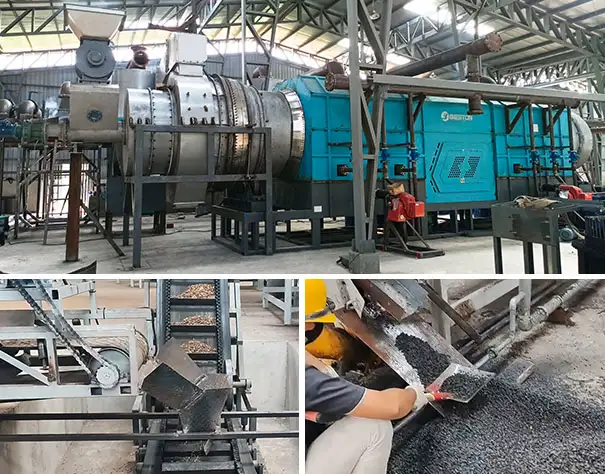
CDR Project: Olive Wood to Biochar
Euthenia Energy Facility · Spain
Local agricultural waste resource utilization
Project Information
| Operating since March 2024 |
Raw material Discarded olive wood |
| Processing Capacity 24 tons/day |
Biochar use Farmland soil improvoment; expanding into building materials |
Equipment Configuration
1× BST-50Dryer
Energy Production Project: Agricultural Waste to Biochar
Fuel Production Facility · Indonesia
Replace traditional kilns with continuous production line
Project Information
| Operating since July 2024 |
Raw material Coconut shell, palm shell, rice husk |
| Yearly output 5,400 tons |
Biochar use Processed into alternative fuel for sale |
Equipment Configuration
CrusherDryer1× BST-50
Beston Biochar Machine: Endorsed Across Three Leading Carbon Registries
From technology evaluation to formal vetting decisions, Beston’s biochar equipment has earned recognition from Puro.earth, Isometric, and Rainbow Standard — giving CDR project developers a verified, faster path to market.



Trustworthy Project Sustainability
- 7200+H/Y Continuous Operation: Tar-free, self-cleaning technology eliminates clogging, keeping the biochar making machine running 7200+ hours per year.
- Quality Assurance: Vetted across multiple registries, our biomass pyrolysis plant meets rigorous service-life standards for long-term reliability with minimal maintenance.
Entry into Carbon Credit Market
- Faster Path to Carbon Credits: Pre-vetted across leading CDR registries, our equipment lets projects skip lengthy technology reviews and move straight into credit issuance.
- Streamlined Data Accounting: Built-in dMRV system connects directly to major registry APIs, automating data collection and verification instead of manual reporting.
2 Models of Biochar Production Equipment for Sale
BST-06Quicker/BST-50 are the latest biochar machines developed by Beston Group. They adopt advanced continuous operation mode to help investors maximize project returns. Different models are suitable for diverse configuration options. This helps customers choose the suitable biochar pyrolysis machine investment option. The following is a specific parameter table for your reference:
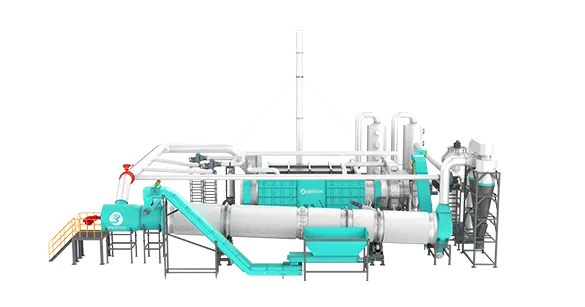
BST-50: Industrial-scale Model
- Vetted by Puro.earth, Rainbow, pre-approved by Isometric
- 6,000 tons biochar production annually
- 7200H/Y stable&safe operation
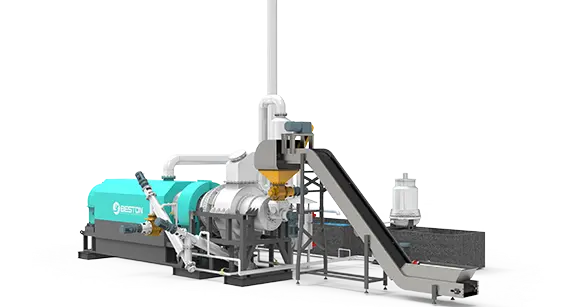
BST-06Quicker: Pilot-scale Model
- Vetted by Rainbow
- 8-hour rapid installation and deployment
- Movable design allowing 8-hour disassembly and reassembly
| Model | BST-50 Standard | BST-50 Max | BST-50S | BST-06 Quicker |
|---|---|---|---|---|
| Operating Mode | Continuous | Continuous | Continuous | Continuous |
| Application | Commercial-scale | Commercial-scale | Commercial-scale | Pilot Testing |
| Certification Platform | Isometric, Rainbow | Isometric, Rainbow | Puro.earth, Isometric, Rainbow | Rainbow |
| Reactor Material | Staineless Steel 304 | Staineless Steel 304 | Staineless Steel 310s | Staineless Steel 304 |
| Feedstock Moisture | Below 15% | From 15% to 55% | From 15% to 55% | Below 15% |
| Feedstock Size | 5-20mm | 5-20mm | 5-20mm | 5-20mm |
| Feeding Capacity (only for pyrolysis) | 10-15m³/h | 10-15m³/h | 10-15m³/h | 100-200KG/H |
| Max. Pyrolysis Temperature (Combustion Chamber) | 650℃ | 650℃ | 700℃ | 650℃ |
| Residue Retention Time | 15-20 minutes | 15-20 minutes | 15-20 minutes | 15-20 minutes |
| Operating Pressure | -20 - 0 pa | -20 - 0 pa | -20 - 0 pa | -20 - 0 pa |
| Cooling Method | Water | Water | Industrial Refrigeration Units | Water |
| Exhasut Gas Treatment | Standard | Standard | High Performance | Standard |
| Biochar Temperature | 45℃ | 45℃ | 45℃ | 45℃ |
| Annual Operating Hours | >7200hrs | >7200hrs | >7200hrs | >7200hrs |
| Service Life | 5-8 years | 5-8 years | 8-10 years | 5-8 years |
| Land Space Required (L*W*H*m) | 35*15*8 | 65*15*8 | 65*15*8 | 35*15*8 |
| Power Consumption | 121kw/h | 270-288kw/h | 270-304kw/h | 25.1kw/h |
| Water Consumption | 5-7m³/day | 5-7m³/day | 0 | 3-5m³/day |
| Fuel Consumption | 220-260m³/h | 220-260m³/h | 220-260m³/h | 30-50m³/day |
| Installation Period | 60 days | 60 days | 60 days | 7 days |
What is Biochar Made of?
For biochar production equipment, most waste biomass can be used. However, due to a lack of utilization awareness, most of the biomass with high recycling value is wasted. Waste biomass can come from a variety of industries. Due to the stable source and high quality of raw materials, waste biomass from the following industries is an excellent choice for biochar production.
| Industry | Biomass Type |
|---|---|
| Forestry | waste branches, tree stump, other logging residue, etc. |
| Wood Processing | wood chips, sawdust, wood product scrap, waste furniture, etc. |
| Food Processing | coconut shell, almond shell, coffee shell, olive shell, etc. |
| Agricultural Planting | rice husk, wheat straw, jute stick, corn stalk, etc. |
Note: The suitability of different biomass varies slightly. Therefore, we recommend that customers send samples to us for testing in advance. Based on the test results, our technical team matches the process solution that suits your production needs.


Diversified Application Scenarios of Biochar
Forestry & Agriculture
Animal Husbandry
Metal Smelting
Construction Industry

- Promote Plant Growth: Biochar increases the soil’s water retention and air permeability, slowly releasing nutrients and improving the microbial environment for healthy plant growth. It is widely used in agriculture to boost farmland fertility and crop yields.
- Ecological Restoration: Biochar restores degraded or contaminated soil by absorbing heavy metals and harmful chemicals while improving soil structure, helping rebuild the natural ecological environment.

- Feed Additives: As a feed additive, biochar improves intestinal health and digestion, increasing feed utilization while reducing methane and ammonia emissions.
- Shed Bedding: As livestock bedding, biochar absorbs moisture and odor from manure, cutting harmful gas emissions and lowering the risk of pathogen transmission.

- Low-carbon Reductant Supply: Biochar serves as a reductant in metal smelting, supplying energy while reducing reliance on fossil resources and moving the industry toward decarbonization.
- Carbon Tax Relief: By replacing fossil fuels, smelting companies cut their carbon footprint and reduce carbon tax costs, gaining a competitive edge in the carbon market with a charcoal machine.

- Cement Additives: Biochar can partially replace mineral admixtures like fly ash in cement, improving concrete performance and significantly cutting the roughly 0.9 tons of CO₂ emitted per ton of cement produced.
- Asphalt Modifier: As a low-carbon asphalt modifier, biochar’s porous structure interlocks with the asphalt matrix and adsorbs light components, increasing binder stiffness and thermal stability.
How to Make Biochar: Workfolw of Biochar Production Equipment
01 Biomass Pretreatment
- Crushing: Crushing the raw material < 20mm. This is to ensure that the raw materials are uniform and have good fluidity. Subsequent screening treatment removes biomass fragments that do not meet the size requirements.
- Drying: The dryer reduces the moisture content of the raw materials to no more than 15% (if moisture content is too high, multiple dryers are required). Excessive moisture content leads to unnecessary energy consumption of biochar equipment.
Subsequently, the coconut shell enters the reactor through a screw conveyor.
02 High-temperature Pyrolysis
- Water Evaporation: As the temperature rises, water inside the biomass cellulose, hemicellulose and lignin gradually escapes.
- Volatile Substance Release: At a temperature of 200℃ ~ 500℃, the biomass begins to decompose and release a large amount of volatile combustible gases. These gases are used to heat biochar reactor.
- Biochar Formation: When the temperature is greater than 500℃, the release of volatile substances decreases. The carbonaceous components in the biomass begin to convert into biochar.
03 Flue Gas Treatment Recovery
- Preheating Air: High-temperature flue gas enters the air-to-air heat exchanger, transferring heat to the air drawn in by the fan.
- Heating Dryer: High-temperature flue gas enters the dryer through ducting. It provides heat for drying raw materials, reducing fuel consumption.
04 Combustible Gas Reuse
- Gas Collection: combustible gas re-enters the combustion system through the outlet, cyclone dust collector, and pipeline. The parts in contact with the combustible gas are all insulated to prevent condensable substances from clogging the system.
- Energy Utilization: The combustion chamber is sealed. The hot air from the air-to-air heat exchanger is used to supply oxygen to the low-nitrogen sealed burner. Then, excess combustible gas enters the exhaust combustion chamber.
05 Biochar Discharging
06 Exhaust Gas Treatment
Biochar from Beston Biochar Machine: Meets ECB Standards
The quality of biochar is a key determinant of the quality of biochar production equipment. The end products from Beston Group equipment not only meet EBC standards, but also have excellent performance. This makes it suitable for a variety of demanding applications. The following are biochar characteristics and test data from authoritative laboratories in Germany/China for your reference:
High Pore Structure
The biochar produced by the equipment has an excellent pore structure. Meet the requirements of the EBC standard to ensure its effectiveness in applications such as carbon capture and soil improvement.
High H/C molar ratio
The H/C molar ratio of biochar is generally maintained between 0.4 and 0.7. This range meets the EBC standard. Therefore, this indicates that it has a high energy density and stability.
Low PAHs Content
The PAHs-8 of biochar is fully up to standard. In particular, the content of PAHs-16 is lower than the 6 mg/kg of the EBC standard, ensuring compliance with environmental and safety requirements.
| Load capacity | EBC Standard | German Laboratory | Chinese Laboratory |
|---|---|---|---|
| H/C Molar Ratio | <0.4 – 0.7 | 0.45 (Generally Meets All Application Standards) | 0.11 – 0.32 |
| Heavy Metal | Depends on Specific Application | Fully Meet All | Fully Meet All |
| PAHS-8 | Depends on Specific Application | Fully Meet All | / |
| PAHS-16 | <6 mg/kg | Compliant with EBC-Feed, Urban, Basic Material Slightly above EBC Feed-Plus, Agro-Bio, Agro |
0.2 mg/kg |

The Hidden Carbon Emission of Improper Biomass Waste Disposal

Forest Fire: Carbon Sink Loss
- Uncontrolled Carbon Release: Biomass accumulation fuels forest fires that burn 7-10 million hectares globally each year — about 0.2%-0.3% of total forest area. Globally, forest fires emit an estimated 1.5+ billion tons of CO₂ annually, more than Japan’s total fossil fuel emissions, largely due to the lack of early-warning systems for biomass clearing in most countries.
- Permanent Sink Loss: Beyond the immediate CO₂ release, fires destroy the forest’s ongoing carbon sequestration capacity and strip soil organic matter, leaving barren land that can take decades to recover.

Natural Decomposition: Slow Carbon Release
- Methane from Decomposition: Left to decompose, biomass releases CH4, whose short-term warming effect far exceeds CO2 — palm waste landfills in Southeast Asia alone emit over 120 million tons of methane annually.
- Uncontrolled Composting: Open-air composting without temperature and humidity control triggers denitrification, releasing N2O with a century-scale warming potential 250+ times that of CO₂ — prompting some countries to ban composting outright.
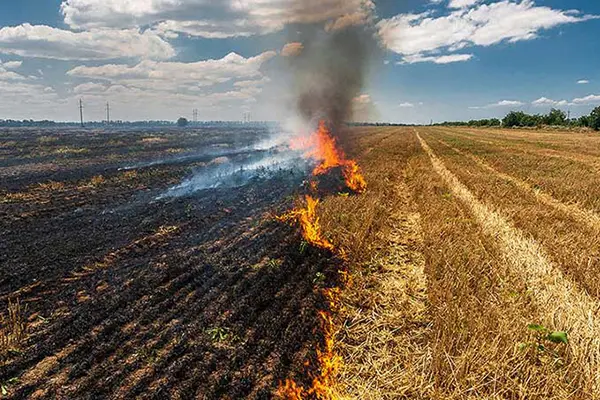
Open Burning: Immediate Carbon Release
- Instant Pollutant Release: Open-air burning of agricultural waste releases 2.5-4.3kg PM2.5 and 0.5-1.2g polycyclic aromatic hydrocarbons (PAHs) per ton, driving up respiratory disease rates in burning areas.
- Compliance Gap: Even where burning bans exist, the lack of viable alternatives keeps violation rates above 60% in some developing agricultural regions — some rural areas have formed recurring “seasonal haze belts”.
How Biochar Achieves Carbon Removal?
Carbon removal refers to the process of capturing, converting, and storing carbon dioxide (CO₂) from the atmosphere through artificial technology. The biochar carbon removal process can be divided into the following key stages:
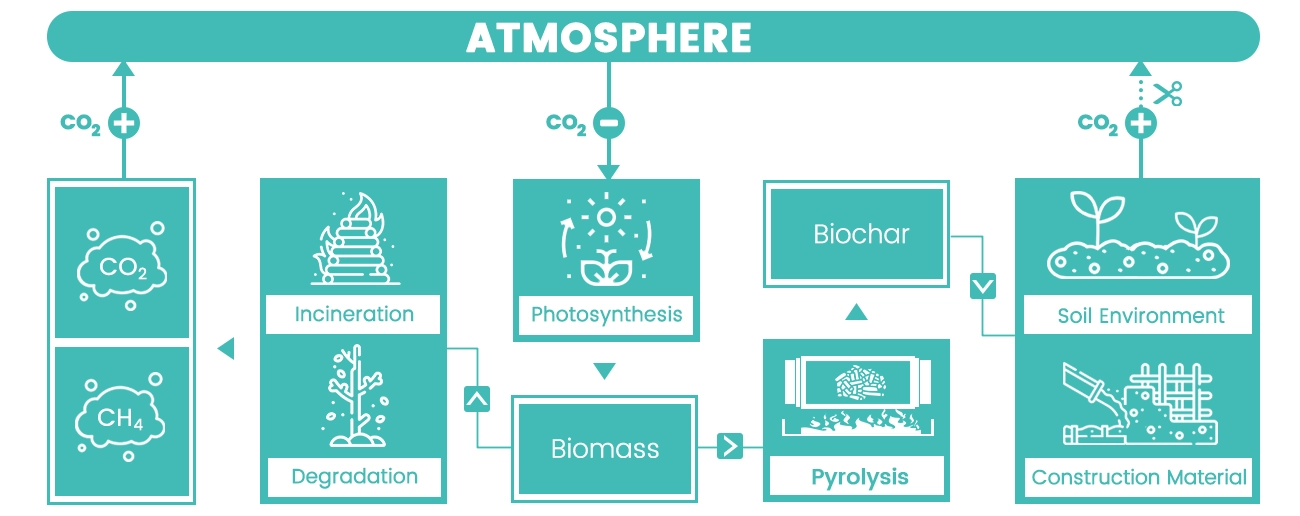
01 Photosynthesis: Carbon Capture
>Subsequently, the coconut shell enters the reactor through a screw conveyor.
02 Biomass Natural Cycle: Carbon Release
03 Biomass Pyrolysis: Carbon Sequestration
04 Biochar Application: Carbon Removal
Technical Advantages of Beston Biochar Prodcution Equipment

7200H/Y Continuous Operation
- Tar & wood vinegar-free: Insulation and heating modules are added to the key facilities of biochar machine. This ensures that tar & wood vinegar will not condense and clog the system.
- Dust self-cleaning: The equipment is equipped with a nitrogen purge system at key points. This effectively prevents dust accumulation and keeps the pipelines and components of the equipment unobstructed.
High Thermal Efficiency
- Combustion System Upgrade: The equipment adopts closed low-nitrogen combustion technology. It combines the heat exchanger’s high-temperature oxygen distribution to maximize thermal energy utilization.
- Double-roller Structure: The carbonization furnace adopts a double-layer design of rollers inside and outside. This can achieve deep dehydration and efficient pyrolysis, and improve energy conversion efficiency.
Safety Guarantee
- Explosion-proof Design: The biochar making machine is equipped with explosion-proof holes and explosion-proof water seals. They effectively prevent safety hazards caused by excessive system pressure.
- Dynamic Sealing: The equipment adopts a multi-layer sealing design with a combination of multiple materials. This design enhances the sealing of the equipment, prevents gas leakage, and improves safety.
Intelligent Operation
- PLC Control: precise temperature control system and variable frequency fan control ensure the stability of biochar production process. Thus, this ensures the consistency of biochar quality.
- IoT Monitoring: operators can monitor data in real time. When parameters are abnormal, operators can respond in time to optimize the operating efficiency and safety of the equipment.
Beston Group’s Global Biochar Making Projects
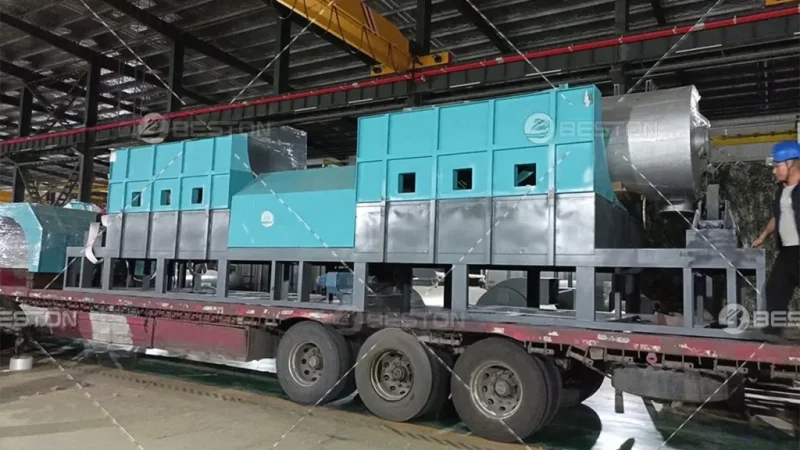
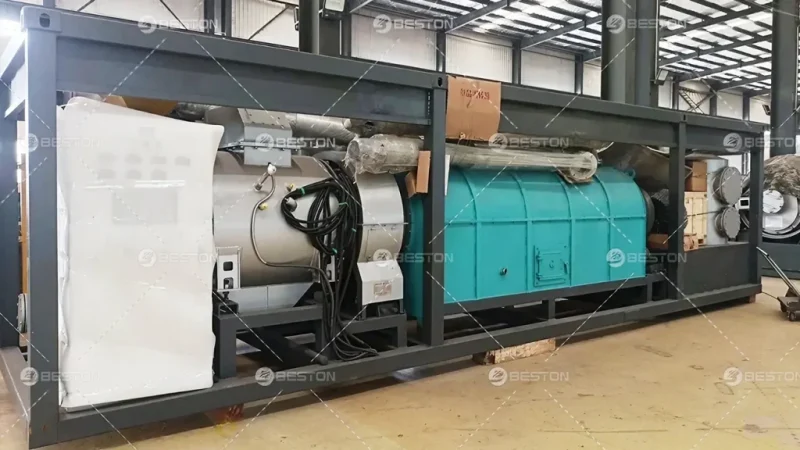
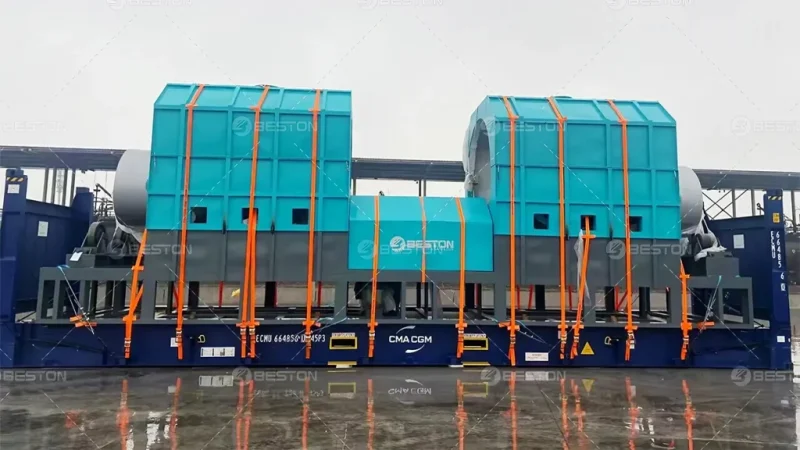
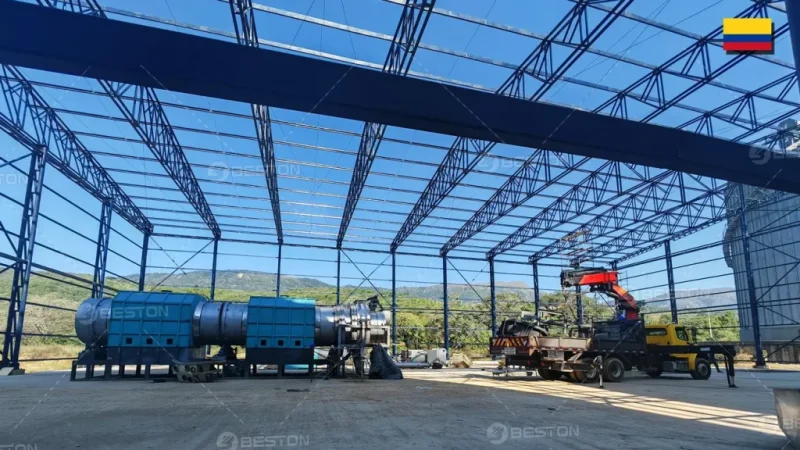
As an industry-leading biochar production equipment manufacturer, Beston Group provides equipment supply for biochar production projects of global customers. The equipment not only alleviates the disposal pressure of waste biomass for customers, but also help them earn additional income. In addition to biomass, Beston Group also offers oil sludge/plastic/tyre recycling solutions. Please contact us if you are interested. Here are some successful cases of Beston biochar machine for your reference.





Become Beneficiary of Biochar Production!
Applying Beston biochar production equipment is a potential business for investors. The final green biochar has wide applications. If you have a preliminary plan, Beston Group can provide a more suitable plan according to your situation. Various types of equipment and one-stop service solutions are avaliable for choosing from. Beston Group is always at your service, please contact us now. If you want to get more videos related to biochar machine, just visit Beston Group’s LinkedIn!
